How to Choose ERP Software: On-Premise vs. Cloud Compared
How to choose ERP software in 2025? Compare on-premise vs cloud on cost, implementation, scalability, customization and security to find the right fit.

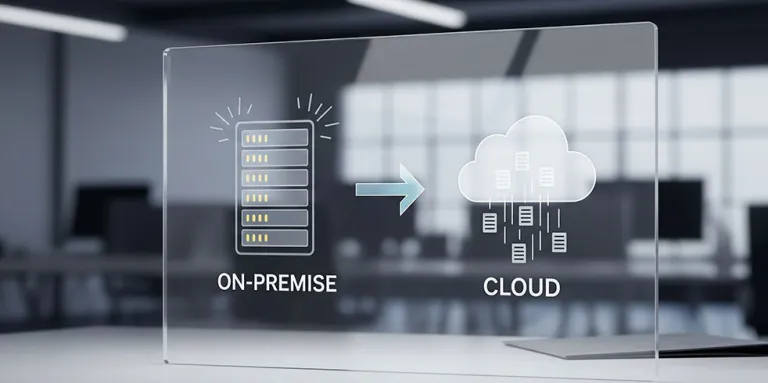
Choosing and implementing ERP software (Enterprise Resource Planning) is one of the most significant technology decisions a company will make. It is not just a software purchase but a strategic investment that will reshape how your business works, how information flows and the operational foundation of your company for years to come. But before you start comparing features across brands, one fundamental question has to be answered first: which implementation model will you choose? On-Premise or Cloud?
In the Indonesian business landscape on Friday, August 29, 2025, the "On-Premise vs Cloud" debate has become a deciding point that will affect everything from cost structure and implementation speed to your business's agility in the future. Understanding the differences, strengths and weaknesses of both approaches is the crucial first step in making your ERP investment a success.
Understanding the Basic Definitions
Before we compare them, let's make sure we mean the same thing by these two terms:
- On-Premise ERP (Local): This is the traditional model. You buy the software license in full up front. The software is then installed and run on servers and IT infrastructure that you own, located in your office or private data center. Your internal IT team is fully responsible for maintenance, security and system updates.
- Cloud ERP (Cloud-Based/SaaS): This is the modern model. You do not buy the software but rent it on a monthly or annual subscription. The software is hosted and run on the ERP vendor's servers, and you access it over the internet through a web browser. All maintenance, updates and infrastructure security are the vendor's responsibility. This is also known as the Software-as-a-Service (SaaS) model.
An In-Depth Comparison on 5 Key Criteria
The decision between On-Premise and Cloud should rest on a careful analysis of your business's needs, resources and long-term strategy. Let's compare the two on the five most important criteria.
1. Cost Structure (CAPEX vs. OPEX & TCO)
This is often the most significant difference.
- On-Premise: Requires a very large up-front investment (Capital Expenditure/CAPEX). You have to buy software licenses, servers and network hardware, and you may also need to hire additional IT staff. Although annual subscription fees may be lower, Total Cost of Ownership (TCO) can become high because of maintenance, electricity and periodic hardware upgrades.
- Cloud: The cost model is predictable operating expenditure (Operational Expenditure/OPEX). You do not need to spend a lot up front. Clear subscription fees make budgeting easier. According to reports from various industry analysts such as Gartner, this shift from CAPEX to OPEX is one of the main drivers of cloud adoption worldwide, because it gives companies greater financial flexibility.
2. Implementation and Maintenance
- On-Premise: Implementation tends to take longer because it involves setting up physical infrastructure from scratch. Once the system is running, all maintenance responsibilities, from security patching and data backups to system upgrades, rest on the shoulders of your internal IT team.
- Cloud: Implementation is generally faster because no hardware setup is needed. The ERP vendor handles all technical maintenance behind the scenes. Feature and security updates are released automatically, so you always run the latest version of the software without a complicated and expensive upgrade project.
3. Accessibility and Scalability
The ability to grow and adapt is key in the modern era.
- On-Premise: Access is usually limited to the company's internal network. For remote access, a complex and secure VPN setup is required. To increase capacity (for example, when the number of users or transactions grows), you have to buy and install additional servers, which is a slow and expensive process.
- Cloud: Accessible from anywhere, at any time, as long as there is an internet connection. This strongly supports hybrid work models and mobile sales teams. Scalability is highly elastic. Users can be added or removed quickly, often just by adjusting your subscription plan.
4. Customization and Control
- On-Premise: Gives the highest level of control and customization. Because you own the system, you can modify the source code (if the license allows it) to build highly unique and specific business processes.
- Cloud: Customization is more limited than with On-Premise. You must operate within the framework the vendor provides. Most modern cloud ERPs offer broad configuration flexibility and a development platform (PaaS) for building extensions, but modifying the core code is usually not possible.
5. Data Security
This topic is often hotly debated.
- On-Premise: You have full control over your data security. The data sits inside your own "fortress." But you also bear 100% of the responsibility. The security of your system depends entirely on the expertise, resources and vigilance of your internal IT team.
- Cloud: Your data is stored on a third party's servers, which may feel less secure to some people. In reality, though, leading cloud ERP providers such as Microsoft, SAP and Oracle invest billions of dollars in cybersecurity, far more than most companies could. They have world-class security experts and international security certifications (such as ISO 27001) that ensure enterprise-level data protection.
Decision Guide: Which Path Is Right for You?
Choosing between On-Premise and Cloud is like deciding between building your own house from scratch and renting a luxury apartment in a serviced building: building it yourself (On-Premise) gives you total design freedom and absolute privacy, but you are fully responsible for all the costs of construction, maintenance, security and repairs. Renting (Cloud) gives you advanced facilities instantly, at a clear monthly cost, with all upkeep handled by the building manager, but you have to follow the existing rules and cannot knock down walls at will.
Choose On-Premise ERP If:
- You operate in an industry with very strict data regulations that explicitly prohibit storing data outside the jurisdiction or on third-party servers (for example, defense or some government agencies).
- You have a very large, capable internal IT team with deep expertise in infrastructure management and cybersecurity.
- Your business processes are highly unique and require deep, code-level customization that a cloud platform cannot accommodate.
Choose Cloud ERP If:
- You are part of the other 95% of businesses, from SMEs to large corporations.
- You want predictable costs (OPEX) and a lower Total Cost of Ownership (TCO) over the long term.
- You need agility, faster implementation and the ability to scale easily.
- You support a remote or hybrid work model.
- You would rather focus on your core business than on managing complicated IT infrastructure.
Conclusion: The Wind Is Blowing Toward the Cloud
In 2025, the market trend, globally and in Indonesia, is very clear. The wind is blowing hard toward cloud ERP adoption because of the flexibility, cost efficiency and speed it offers. Still, On-Premise remains a valid choice for very specific scenarios. The right choice, in the end, is not about which technology is more "advanced" but about which model best fits your company's business strategy, resources and long-term goals.
The fundamental decision between On-Premise and Cloud will shape the future of your business operations. To get an in-depth analysis of your unique needs and a recommendation for the most suitable ERP software, you need guidance from an experienced partner. The expert team at Metrodata is ready to help you make this crucial choice, so you build the right digital foundation for long-term success.