XLR Jack and Other Audio Cable Connectors Explained
XLR jack is only one of several audio cable connectors. Learn how XLR, RCA, TRS, BNC and MIDI connectors differ and what each one is used for.

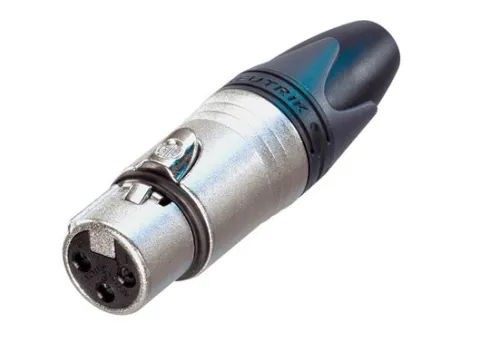
If you work in the music world, you are already familiar with the XLR jack, one of the most widely used types of audio cable connector. Most people outside the field, though, assume an audio cable is the same as an ordinary electrical cable. In fact, audio cables are different from electrical cables.
According to https://www.goshen.co.id/, the function of an audio cable is to carry audio signals to software, computers, or other devices. An audio connector is an electrical connector designed for audio frequencies, and the signal it carries can be digital or analog. How clear the audio signal is depends on how the cable is connected, selected, and configured.

Audio cables come in two kinds: single core and double core. Single core cable is used for unbalanced audio, which can be described as an audio signal with a lot of noise that tends to be uneven. Double core cable is the opposite. It is used for balanced audio, which is more even. So which audio cable connectors are commonly used?
Types of Audio Cable Connectors
XLR Connector
This is an electrical connector often found on professional audio and video equipment. The XLR connector is round, with three to seven pins inside. The XLR jack was first invented by James H. Cannon, founder of Cannon Electric in Los Angeles, California. That is why it is also often called the Cannon connector. This connector is used for condenser mics, because it carries power from phantom power.
RCA Connector
This is one of the most commonly seen connectors. RCA stands for Radio Corporation of America, the company that first introduced the connector to the public back in 1940. At that time, RCA connectors were used to connect a mono phonograph player to an amplifier.
The male connector has a metal plug in the center surrounded by a ring. The ring's cover is made of rubber. The female connector has a hole in the center and is also surrounded by a metal ring. The ring on the female connector has a smaller diameter, so when the two are joined they make a tight connection.
TRS Connector
TRS stands for Tip, Ring, and Sleeve. This connector is cylindrical and is generally used to transmit analog audio signals. It comes in several types: 2.5 mm mono (TS), 3.5 mm mono (TS), 3.5 mm stereo (TRS), and 6.35 mm (1/4 in) stereo (TRS).
BNC Connector
BNC, or Bayonet Neill-Concelman, is often used to sync sample rates. The sample rate in question is the one shared between an audio interface and an external preamp.
MIDI Connector
MIDI stands for Musical Instrument Digital Interface. MIDI is generally used to connect electronic musical instruments to a computer.
That covers audio cable connectors, from the XLR jack to RCA, TRS, BNC, and MIDI. We hope the information is useful.