How to Clean Surfaces Before Applying 3M Tape: Step-by-Step
Guide to cleaning a surface before applying 3M tape: steps, cleaning materials, common mistakes and the 3M electrical tape options available from SINARCS.
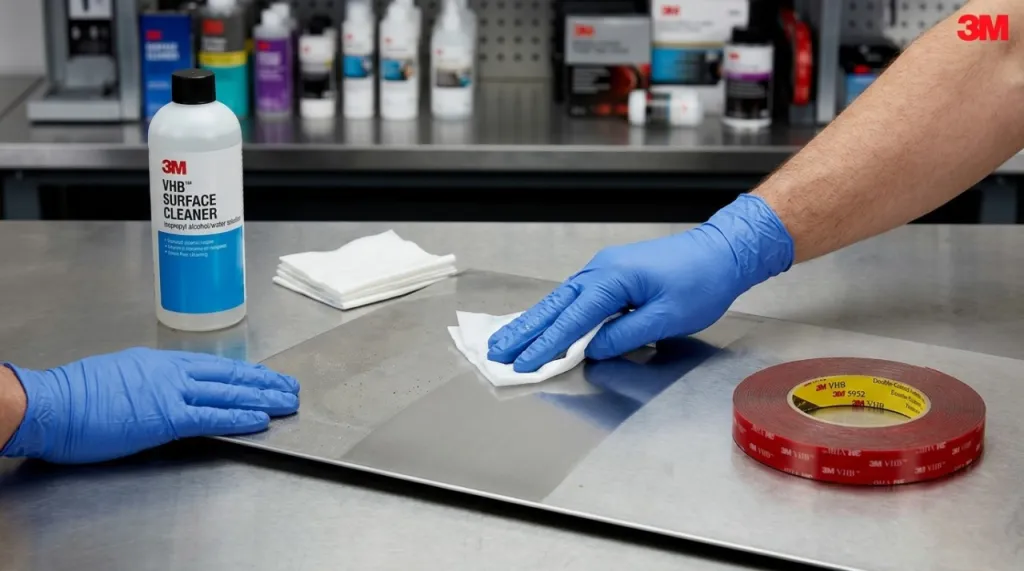
How to clean a surface before applying 3M tape: switch off the power if there is any, remove coarse dust, remove oil with isopropyl alcohol (IPA) and a lint-free cloth, sand lightly if there is rust or oxide, then dry completely. Apply the tape while the surface is clean, dry and untouched by hands so the adhesive bonds strongly and lasts.
Key Takeaways
Adhesive only works at its best on a clean surface. Dust, oil, moisture and rust form a barrier between the adhesive and the material.
Work order: switch off the power, remove coarse dirt, remove oil, sand if needed, clean again, dry, then apply the tape.
Commonly used cleaning materials: isopropyl alcohol (IPA), a lint-free cloth, and a brush or fine sandpaper for oxidized metal.
Avoid oily cleaners, silicone sprays and harsh solvents that can damage cable sheathing.
Do not touch the surface once it has been cleaned, because skin oils easily reduce adhesion.
Safety first. Work on electrical installations must be done with the power source disconnected and in line with occupational health and safety (K3) procedures.
Consult the technical data sheet for each product, because cleaner recommendations and application conditions can differ between tape types.
Introduction
Many tape problems, such as peeling ends, rolls that shift or layers that come off after a few weeks, do not actually come from the quality of the tape. The cause is often much simpler: the surface being taped was never truly clean.
In electrical insulation work, a failure like this is about more than appearance. Insulation that does not bond properly can open a gap for moisture and dust, which in the end raises the risk of faults at the splice.
This article explains the practical steps for cleaning a surface before applying 3M tape, the right materials to use, the mistakes that happen most often, and the types of 3M tape worth considering from the catalog of PT Sinar Cemerlang Semesta (SINARCS). The product examples focus on electrical tape, but the principles of surface preparation apply broadly to other tapes.
Why Does Surface Cleanliness Determine Adhesion?
A pressure sensitive adhesive works by "wetting" the surface, meaning the adhesive has to touch the material as closely as possible on a microscopic scale. Contaminants such as dust, oil, lubricant residue, condensation or oxide layers block that contact. As a result, the adhesive actually bonds to a layer of dirt, not to the material itself.
That is why surface preparation is not an optional extra step. In many cases it matters more to the result than the choice of brand or tape thickness.
Practitioner quote (draft, please confirm with the source): "We often find tape that is blamed for failing when the surface was still oily or damp when it was applied. Five minutes of cleaning usually saves hours of work." ([name], Technician / Engineer, PT Sinar Cemerlang Semesta)
Tools and Materials Needed
Tool / material
Purpose
Notes
Isopropyl alcohol (IPA)
Dissolves light oil and fingerprints
Flammable; keep away from flames and sparks, and use in a ventilated space
Lint-free cloth
Lifts dirt without leaving fibers behind
Use a clean cloth and replace it once it gets dirty
Soft brush or dry paintbrush
Removes dust and loose particles
Do this before wetting the surface
Fine sandpaper or a light abrasive pad
Removes rust or oxide on metal
Use light pressure to avoid excessive scratching
Water and mild detergent
Cleans heavy dirt or thick oil
Rinse and dry completely before continuing
Clean gloves
Keep skin oils off the surface
Replace when dirty
Personal protective equipment
Eye and respiratory protection while cleaning
Match it to the cleaning material and working conditions
Steps to Clean a Surface Before Applying 3M Tape
1. Make Sure Working Conditions Are Safe
For work on cables or electrical connections, disconnect the power source and follow lockout/tagout procedures in line with the company's occupational health and safety (K3) policy. Never clean live parts with any liquid.
2. Inspect the Surface
Look at the condition of the cable sheathing or component. If there are cracks, deep abrasions or damage to the insulation, repair or replace it first. Tape is not a substitute for material that is badly damaged.
3. Remove Coarse Dirt
Brush or wipe dry to remove dust, debris and loose particles. If there is mud or thick dirt, clean it with water and mild detergent, then rinse and let it dry.
4. Remove Oil and Fingerprints With IPA
Dampen a lint-free cloth with IPA, then wipe the surface in one direction. Follow right away with a clean, dry cloth so the lifted dirt does not dry back onto the surface (the two-cloth method). Switch to a fresh side of the cloth regularly so dirt is not carried to other areas.
5. Deal With Rust or Oxide on Metal
If terminals, lugs or conductors look oxidized, sand lightly or brush until clean metal shows, then repeat the cleaning with IPA. Remove all abrasive dust.
6. Dry Completely
Let the IPA evaporate and make sure there is no moisture or condensation. Adhesive does not bond at its best to a wet surface.
7. Apply the Tape Promptly
Once the surface is clean, do not wait too long and avoid touching the bonding area. Peel off the tape without touching the adhesive side, then apply it with overlap and even tension as the product instructions say. Apply at a reasonable room temperature, because very cold temperatures can reduce tack on many adhesive tapes.
Cleaning Guide by Surface Type
Surface type
How to clean
What to watch for
Metal (copper, aluminum, steel)
Brush or lightly sand if oxidized, then IPA
Clear away metal dust before applying the tape
PVC cable sheathing
Dry wipe, then IPA or mild detergent
Avoid harsh solvents such as thinner, which can soften PVC
Polyethylene or XLPE sheathing
Dry wipe and IPA
This surface is slick and low in surface energy; choose a suitable tape and check the data sheet
Rubber and elastomer materials
Dry wipe and IPA, test a small area first
Avoid oily cleaners
Glass or ceramic
IPA, then dry
Make sure there is no condensation
Painted surfaces
IPA after the paint is fully dry
Paint that is not dry or is brittle makes the tape come off easily
Porous or rough surfaces
Brush off dust, then clean as needed
Consider a sealer or a different tape if necessary
Relevant 3M Tape Products at SINARCS
The Tape category in the SINARCS catalog includes a number of 3M electrical tapes. Specifications differ between types, so use the table below as a starting point and consult the technical data sheet before choosing.
Product
Type
Typical use
Surface preparation notes
3M Scotch Super 33+ Vinyl Electrical Tape
Vinyl insulating tape
Insulation for low-voltage cables and electrical splices, generally known for its 600 V and 105°C rating
Clean, dry, oil-free surface
3M Scotch Super 88 Electrical Tape
Vinyl insulating tape for heavy-duty conditions
Electrical insulation in more demanding environments, generally 600 V and 105°C
Make sure it is dry; avoid condensation during application
3M Scotch Vinyl Color Coding Electrical Tape 35
Color-coded vinyl tape
Phase marking and cable identification
Clean the sheathing so the tape does not slip easily
3M Temflex Vinyl Electrical Tape 150, 160 and 170
Temflex series of vinyl insulating tape
General electrical insulation; check the thickness, rating and temperature of each type
Clean with IPA and dry before applying
3M Glass Cloth Electrical Tape 27
Glass cloth tape
Insulation applications with high-temperature requirements per the data sheet
Surface must be clean and free of fiber dust
3M Scotch 23 Rubber Splicing Tape
Self-adhesive rubber tape for splices
Insulating cable splices; follow the manufacturer's wrapping procedure
Clean the splice before wrapping for the best seal
To see the full category, visit the SINARCS Tape page. Because each type has its own voltage rating, temperature and usage limits, the SINARCS technical team can help match one to your application.
Common Mistakes When Cleaning Surfaces
Wiping with a dry cloth only. The dust goes, but the oil film stays.
Using oily cleaners or silicone sprays. Their residue lowers adhesion.
Using harsh solvents on PVC. Thinner or strong solvents can soften cable sheathing.
Touching the surface after cleaning. Skin oil is enough to weaken the bond.
Using a dirty or linty cloth. The dirt just moves around and fibers are left behind.
Applying while the surface is not yet dry. Leftover liquid or condensation blocks the adhesive.
Ignoring rust or oxide. The adhesive bonds to a brittle layer, not to the metal.
Waiting too long to apply. Dust and moisture quickly settle back on.
Simple Ways to Check Surface Cleanliness
Water drop test (water break). On a truly clean surface, water spreads into a thin film; if it beads up, there is still oil. This method is known in industrial practice and is linked to the ASTM F22 standard.
Dyne pen. Used to estimate the surface energy of plastics, with reference standards such as ASTM D2578 for polyolefin films.
Adhesion test. Apply a small piece of tape, press it down, then try to peel it off. If the adhesive lifts cleanly without any force, repeat the cleaning.
Practitioner quote (draft, please confirm with the source): "Always test a small area first before doing the whole installation.
Safety While Cleaning
Disconnect the power source and follow lockout/tagout procedures before touching cables or connections.
IPA is flammable. Keep it away from flames, heat and sparks, and use it in a ventilated space.
Wear suitable goggles and gloves, and read the safety data sheet (SDS) for the cleaning material.
Store used cloths and cleaning materials according to procedure; do not discard them carelessly.
Do not apply liquids to equipment that is still live.
Supporting Data and References
The ASTM F22 standard covers the water break test for checking for hydrophobic films on surfaces.
The ASTM D2578 standard covers wetting tension on polyolefin films, which relates to surface energy.
3M's application guidance for adhesive tapes, including 3M VHB, recommends cleaning with isopropyl alcohol and water as a standard step before application.
Each product's Technical Data Sheet (TDS) and Safety Data Sheet (SDS) are the primary source for specifications, ratings and usage limits.
Indonesian occupational safety regulations, including Law No. 1 of 1970 on Occupational Safety, are the basis for safe work procedures on electrical installations.
FAQ (Frequently Asked Questions)
How do you clean a surface before applying 3M tape?
Remove coarse dust, remove oil with isopropyl alcohol (IPA) and a lint-free cloth, sand lightly if there is rust, then dry completely before applying the tape. For electrical work, make sure the power source is disconnected.
What is the best cleaning material before applying 3M tape?
Isopropyl alcohol (IPA) is generally the choice because it dissolves light oil effectively and evaporates quickly. For heavy dirt, use water and mild detergent and then dry completely.
Can you use thinner or gasoline to clean?
Not recommended. Harsh solvents can soften PVC cable sheathing, leave residue, and are hard to control safely. Choose a cleaner the manufacturer recommends.
Does the surface have to be completely dry before applying tape?
Yes. Moisture or condensation blocks contact between the adhesive and the surface, which weakens the bond.
Do you need to sand the surface before applying tape?
Only if there is rust, oxide or a brittle layer on the metal. Sand lightly, clean off the abrasive dust, then repeat with IPA.
What if the surface is slick plastic such as polyethylene?
This kind of surface has low surface energy, so it is harder to bond to. Clean it well and choose a suitable tape, or consult the technical team and the data sheet for the tape you use.
Which 3M tapes does SINARCS offer in the Tape category?
At the time of writing, the SINARCS Tape category includes a number of 3M electrical tapes, such as Scotch Super 33+, Scotch Super 88, Scotch Vinyl Color Coding 35, Temflex 150, 160 and 170, Glass Cloth Electrical Tape 27, and Scotch 23 Rubber Splicing Tape. Availability can change, so check the latest product pages.
Can tape that has already been applied be removed if the surface turns out to be dirty?
Yes, but the adhesive and tape that have already stuck to a dirty surface should be replaced. Clean the area and apply fresh tape for a dependable result.
Conclusion
A strong, long-lasting 3M tape bond starts with a surface that is clean, dry and oil-free. The sequence is simple: make sure working conditions are safe, remove coarse dirt, clean with IPA and a lint-free cloth, sand if there is rust, dry, then apply the tape without touching the bonding area.
The right tape still has to be matched to the need. Consult the technical data sheet for voltage rating, temperature and usage limits, and involve the technical team if your application calls for special conditions.
Call to Action: Choose the Right 3M Tape With SINARCS
PT Sinar Cemerlang Semesta (SINARCS) supplies 3M electrical tapes, including Scotch Super 33+, Scotch Super 88, the Temflex series, Glass Cloth Tape 27 and Scotch 23 Rubber Splicing Tape.
View the catalog: SINARCS Tape category.
Consult on your needs: our team helps match the tape type to your application and working conditions.
Request a quote: contact us at (+62) 21 5431 7537, email [email protected], or WhatsApp.
Address: Green Sedayu Biz Park, Daan Mogot DMB No. 91, Jl. Daan Mogot KM. 18, Kalideres, Jakarta Barat 11840.